Depression psychiatrist, New York City
Depression Psychiatrist in NYC
Treatment for depression and treatment-resistant depression — UWSUpper West Side & Union Square Offices
Request an appointment
MD-PhD. I prescribe the way I once ran experiments — less is more, evidence over reflex.

- Same-week appointments available
- Complex cases welcome
- Adults & Teens
- Now accepting new patients
- Less-is-more prescribing
Training & Credentials Psychiatry ResidencyNYP-Columbia
 Instructor in PsychiatryColumbia University
 MD & PhDOhio State
 Partner PracticeCaroline Fu Psychiatry
Psychiatry ResidencyNYP-ColumbiaInstructor in PsychiatryColumbia UniversityMD & PhDOhio StatePartner PracticeCaroline Fu PsychiatryInsurance & ReimbursementPlease note that our clinic does not accept insurance. We are out-of-network.
Depression & Treatment-Resistant Depression Care
Depression Treatment as a Process, Not a 15-Minute Med Check
A hypothesis about what's driving your symptoms, tested against how you respond, and revised as the evidence changes.
What most people mean when they search for help with depression is this: finding the right treatment, then staying with you while it does its job. Depression care here is an ongoing process — monitoring, titrating, reassessing — not a one-time prescription pushed through a fifteen-minute check. That pattern leaves no room to understand what's driving your symptoms. So many people tell me the same thing: I want someone who actually spends time with me and isn't rushing. Between Union Square and the Upper West Side, longer appointments and closer contact let me adjust faster and follow a less-is-more philosophy — understand the drivers first, then peel back rather than pile on.

Need Urgent Assistance?
Visits & Fees
Transparent fees$850 initial evaluation
$500 hour-long follow-up
$400 medication visit
Out of NetworkWe are not contracted with any health insurance providers
Superbills providedMany PPO plans reimburse 60–80% of their allowed amount after your deductible
A Physician-Only Group Practice
Physicians Trained at Harvard, Columbia, and Tufts
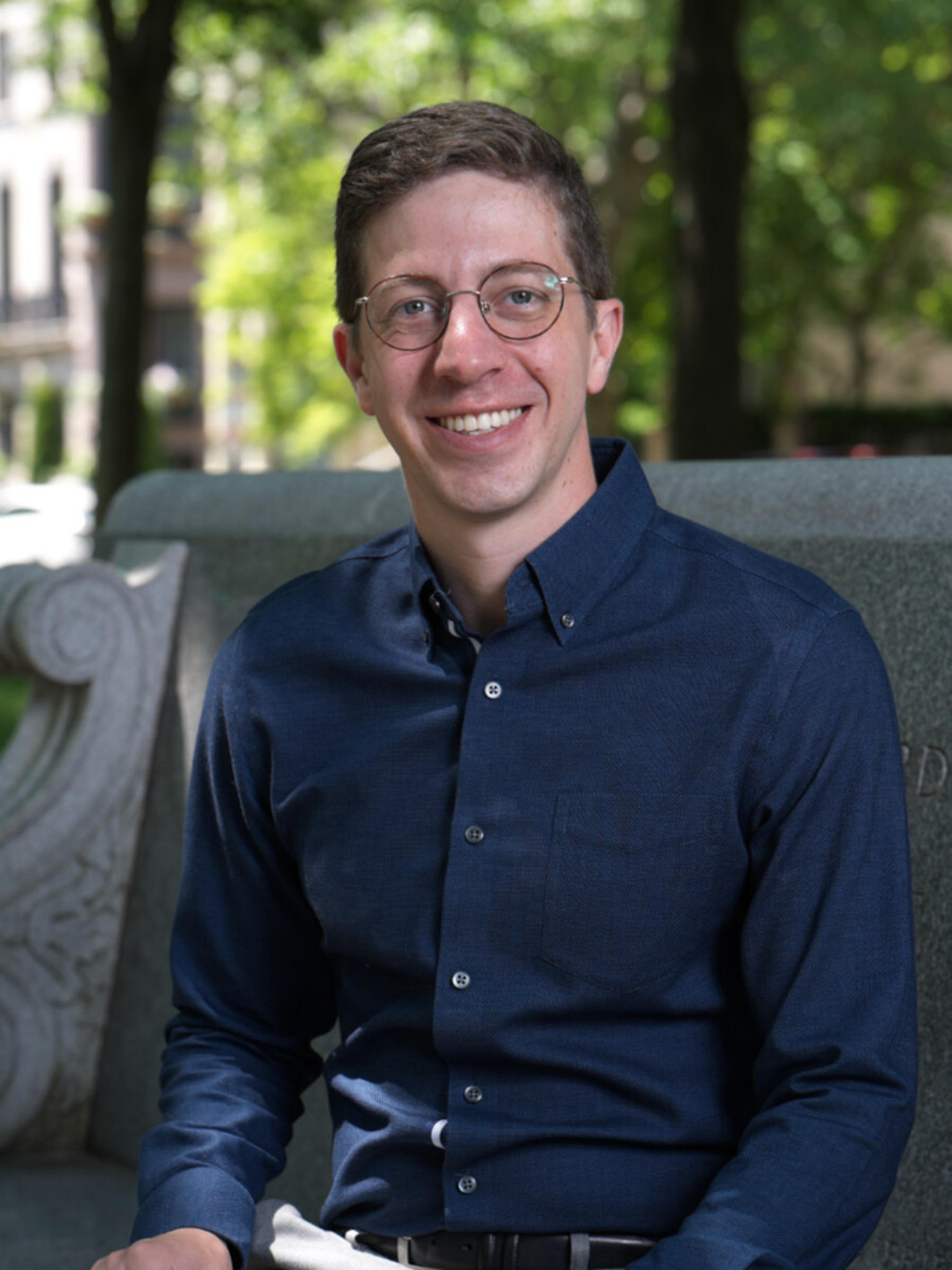
Dr. Kavin's NYC practice is part of Caroline Fu Psychiatry — a small group where every clinician is a physician, not a marketplace of prescribers.
Offices in New York and Boston, one standard of care.


The Concierge Difference
Prescribing Like a Scientist
Built around a simple idea — that understanding your whole story, and staying with it, is what actually moves things.
I treat prescribing as reasoning, not reflex — form a clear idea of what's driving your symptoms, test it against how you actually respond, and revise when the evidence changes. Choosing between medications means weighing your prior response, family history, side-effect profile, and what else is in the picture — other conditions, other prescriptions, real interactions. If the first choice doesn't fully work after a fair trial, that's information, not a verdict: we switch to a different medication or add a second that targets what remains. I start low, move one variable at a time, and tell you my thinking as we go.
Longer appointments let me watch closely — titrate a dose, catch a side effect, adjust sooner. A fifteen-minute med check can't do that. I track how you're actually doing with scales like the PHQ-9 and GAD-7 over time, so dose decisions follow a trend, not a guess — fewer than one in five prescribers work this way. More time means I can notice fluctuations earlier and adjust before things get harder.
I meet people on a long list of medications, one treating the side effects of another. My aim is to understand what's driving symptoms and, where it's reasonable, deprescribe — minimize polypharmacy rather than keep adding. When we come off something, I use hyperbolic tapering: reductions of roughly ten percent of the current dose at a time, over months, per the Maudsley Deprescribing Guidelines and NICE guidance. The last few milligrams are often the hardest — which is exactly why slow beats fast.

What I Sit With
These are situations inside a life — not labels to slot you into.
Treatment-resistant depression
The long medication list
“My meds just stopped working”
“How long is this supposed to take?”
“I'm scared to come off my antidepressant”
“The side effects are worse than the problem”
“I feel numb, like I can't feel anything anymore”
A second opinion, before adding one more pill
Medications another doctor started
A dose that isn't landing
Questions People Ask Before We Begin
Reach Out To Learn More
Maybe you are considering a first medication plan and want to understand what you would actually be starting. Maybe you have been searching for a depression psychiatrist near me and want a fresh set of eyes — a real second opinion on a regimen that has grown long. Or maybe you are ready to taper off something you no longer need. Any of those is a good reason to reach out. If you are curious, let's talk — I see patients in person here in New York City.
About the Doctor
About Dr. Kavin Fatehchand
A physician-scientist who spent years asking what drives a disease — now asking the same about you.
I'm Dr. Kavin Fatehchand, MD, PhD — a psychiatrist in New York. Before psychiatry, I spent years of doctoral research asking what actually drives a disease. I ask the same question about symptoms: what's driving this — biology, trauma, the systems you live in? That question shapes how I prescribe, which is less-is-more — understand the drivers, then peel back rather than keep adding.
I'm a queer, South Asian physician, and I say so plainly because I want you to know who's sitting across from you. Representation is the first step — never an assumption about your story. I formulate out loud, telling you what I'm thinking so we can make sense of it together.
Medically reviewed by Dr. Kavin Fatehchand, MD-PhD — psychiatrist, New York City. Last reviewed August 2026.

Medication, honestly
Two things can be true at once
“I don't want to be on pills forever” and “I want to try meds but I'm nervous about them” — both belong in the same conversation. Before we add or subtract anything, let's understand what's actually driving your symptoms.
Less is more. We start by making sense of the story, together — then decide what belongs in the plan.